
FAU Returning Players are the clearest reason Florida Atlantic entered the 2026 season with a more stable roster profile than many programs working through heavy transfer churn. As of September 7, 2026, the Owls have a returning quarterback with a full year of high-volume production, a receiver who reached a major program benchmark, and defensive starters who carried real statistical weight in 2025. For a scout focused on player recruitment and youth development in Florida, that continuity matters because it gives coaches a firmer base for evaluating transfers, high school signees, and redshirt players against known college production.
The caution is just as important as the optimism. Returning production does not guarantee better results. It does, however, reduce some uncertainty. Florida Atlantic can measure new personnel against Caden Veltkamp, Easton Messer, Kaden Shields-Dutton, Leon Hart Jr., CJ Doggette Jr., Damarius McGhee, and Vincent Fiacable rather than building the 2026 roster around projection alone. That is a useful starting point for a Boca Raton program trying to turn retention into competitive balance.
FAU Returning Players And Offensive Continuity
Scouting FAU Returning Players At Quarterback
Veltkamp is the center of the offensive discussion. He returned for 2026 after leading Florida Atlantic in 2025 with 3,641 passing yards, 24 touchdowns, a 66.99 percent completion rate, and 303.42 passing yards per game across 12 games, according to FAU’s roster release. Those numbers show volume and accuracy, not just late-game accumulation. From a scouting view, the completion rate paired with the per-game yardage suggests a quarterback who carried weekly responsibility in the passing structure.
The phrase “Owl Raid” has been used around FAU’s offense, but the evaluation should stay practical. A quarterback returning with more than 3,600 passing yards gives the staff a baseline for route timing, protection calls, third-down teaching, and receiver development. For young players in the room, that can sharpen practice standards. For transfer targets, it also gives recruiters a credible role to sell: join a system where the ball has already moved through an experienced passer.
Messer, Shields-Dutton And Skill Balance
Messer’s 2025 production gives the receiving room its top returning reference point. The redshirt senior led the Owls with 8.67 receptions per game in 2025, which FAU identified as the highest mark in the sport, and he became the fourth Owl to pass 1,000 receiving yards in a single season. That placed him third all-time for the program in that category. In a recruiting and transfers context, that matters because wideouts and defensive backs on the practice field are measuring themselves against a player with verified top-end usage.
Shields-Dutton adds a different type of value. The returning running back joined Veltkamp and Messer as part of the offensive core, and FAU reported that the three accounted for more than half of the team’s touchdown-scoring production from 2025. That is not the same as saying the offense is complete. It does show that Florida Atlantic retained its most visible scoring framework. For development, the key question is whether the supporting cast can cut pressure off those three rather than simply depend on them to repeat prior production.
Defensive Retention Gives The Owls A Clear Base
Hart, Doggette And Front-Seven Carryover
On defense, Leon Hart Jr. and CJ Doggette Jr. give the Owls returning production at two levels of the front. Hart returned after leading FAU with 96 total tackles in 2025, including 33 solo and 63 assisted stops, with 4.5 tackles for loss. Doggette came back after posting 28 total tackles, 7 tackles for loss, and 4 sacks. Together, they help explain why FAU reported that its 2026 defense brought back 55 percent of tackle production, 80 percent of sacks, and 65 percent of tackles for loss from 2025.
Those percentages are useful because defense is often harder to stabilize through one player. Tackling volume can depend on scheme, game state, and opponent tempo. Sack totals can swing with matchups. Still, returning that share of production gives the defensive staff a teaching spine. Hart can set the standard for pursuit and run-fit communication. Doggette gives the line a returning pass-rush and backfield-disruption marker. For incoming defensive linemen from Florida high schools, those two roles offer clear film examples inside the same building.
McGhee And Secondary Evaluation
Damarius McGhee gives the secondary another returning data point. He recorded 32 tackles in 11 games in 2025, listed in FOX Sports returning stats. Tackles alone do not define defensive back play, and they should not be treated as a full coverage grade. They do confirm that McGhee was involved often enough to be part of the 2026 roster conversation.
For a scout, the next layer is role clarity. Was a defensive back producing tackles because he handled space well, because the front funneled plays toward him, or because the defense faced too many snaps? The research available here does not answer that fully. The safer read is that McGhee’s return adds experience to a secondary that will need communication against tempo offenses and route spacing. If the pass rush led by returning front players becomes more consistent, defensive backs like McGhee may be evaluated in cleaner situations.
Recruiting, Transfers And Development Signals
Portal Additions Need A Returning Core
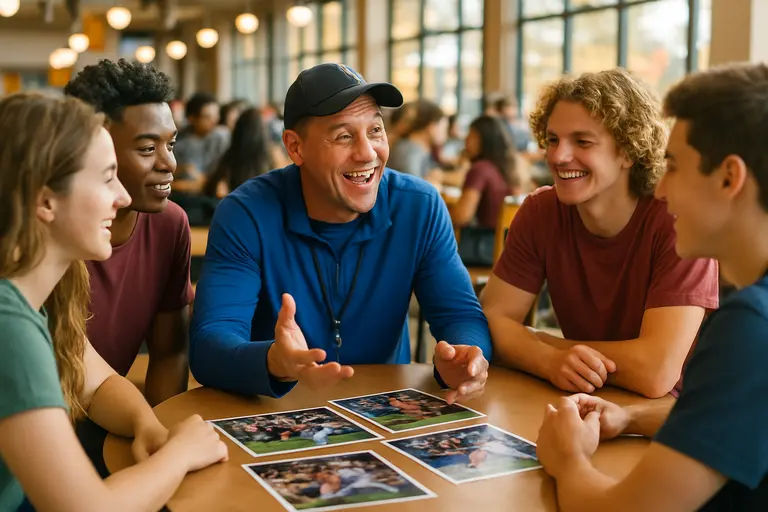
The recruiting and transfer angle starts with fit. FAU’s returning production gives the staff something firmer than open competition at every position. Transfers can be targeted for specific roles. High school signees can be developed without being pushed into every high-leverage snap before they are ready. FAU Returning Players create that staging area, especially on offense, where Veltkamp, Messer, and Shields-Dutton already own defined production from 2025.
Vincent Fiacable’s return on the offensive line is part of that stability, even without using unsupported snap counts or grading data. Quarterback retention is far more valuable when the line can keep some continuity in calls, cadence, and protection rules. Skill talent often gets the public attention, but line familiarity affects whether a passing offense can stay on schedule. That should matter to local recruits evaluating whether FAU can develop them in a repeatable structure rather than a weekly scramble.
Community Value Of Roster Continuity
There is a local sports value to this roster shape. Boca Raton families, high school coaches, and youth players track programs differently when they can identify returning college athletes over multiple seasons. A receiver like Messer passing 1,000 yards gives young wideouts a visible target. A linebacker like Hart leading the team in tackles gives defenders a model for consistency. For comparison across the state, roster development questions also show up in our analysis of Gators freshmen impact, where talent evaluation depends on how quickly young players earn roles around veterans.
Florida Atlantic’s challenge is turning recognition into repeatable development. Returning stars can raise practice quality, but they can also mask depth concerns if the second group does not gain meaningful readiness. The staff’s best outcome is not only another big statistical season from the known names. It is a roster where younger players learn from those names, transfers fill narrow needs, and the program avoids overloading any one position group.
Why FAU Returning Players Matter In Boca Raton
FAU Returning Players matter because they connect roster planning, player development, and local identity. Veltkamp gives the Owls a returning passing engine. Messer gives them a proven reception leader. Shields-Dutton keeps a touchdown contributor in the backfield. Hart and Doggette preserve front-seven production. McGhee adds experience in the secondary, while Fiacable helps keep the offensive line conversation from starting over.
The supported numbers point to a team with a real returning core, not a finished product. FAU still has to prove that 2025 production can hold up under 2026 opponents, injuries, rotation changes, and game-to-game adjustments. From a scouting chair, though, the value is clear: FAU Returning Players give coaches and recruits a shared reference point. That makes the 2026 roster easier to evaluate, easier to teach, and more relevant to the South Florida football pipeline that feeds the program’s long-term plans.