
FSU recruiting strategy became a sharper local sports story after Florida State changed athletic leadership on September 14, 2026. The school fired Athletic Director Michael Alford and appointed Senior Associate AD Bruce Warwick as interim AD, with Warwick placed over athletic and recruiting operations during the reset, according to Yahoo Sports. That matters in Tallahassee because recruiting is not just a signing-day scoreboard. It is roster depth, staff alignment, NIL planning, campus trust and the weekly mood around Doak Campbell Stadium.
The timing gave Florida State little room for vague messaging. By October 24, 2026, the program had already spent the year adjusting its football front office, adding recruiting leadership and trying to balance high school development with transfer portal repair. That is a lot of motion for any college program, and it asks one central question: can the Seminoles turn administrative change into clearer roster decisions?
FSU Recruiting Strategy After The AD Change
Administrative Timing In Tallahassee
The Alford firing did not happen in a vacuum. It landed after a year in which Florida State had already reshaped parts of its personnel operation. The research record shows that FSU created a Deputy Athletics Director and General Manager of Player Personnel role on January 1, 2026, filled by John Garrett. That role was designed to oversee roster construction, recruiting operations, player evaluation and NIL integration. The same date also brought Taylor Edwards as Director of Football and Player Acquisition, with a stated focus on collaboration in evaluating, acquiring and retaining players.
That structure suggests the school recognized a modern roster problem before the AD change. College football programs now have to recruit high school prospects, retain contributors and manage transfer movement in the same calendar. The caution flag for FSU is that front-office titles alone do not solve roster churn. They help only if the head coach, personnel staff, NIL operation and interim athletic leadership are pulling in the same direction.
What FSU Recruiting Strategy Needs From Interim Leadership
The first need is stability in communication. Warwick’s interim role gives Florida State a point person while the athletic department resets. For recruits and families, the practical concern is simple: who will be making decisions about resources, staff support and long-term plans? That is where FSU recruiting strategy has to sound steady even while the department is changing above the football offices.
The second need is internal accountability. If the recruiting staff is evaluating prospects one way, the transfer operation is filling needs another way, and NIL planning is reacting late, the roster can become uneven. The January 2026 personnel moves were built to reduce that risk, but the September leadership change put those systems under a brighter light.
Front Office Recruiting Reset
Player Personnel Roles Carry More Weight
Garrett’s position matters because modern roster construction is closer to year-round team management than traditional recruiting administration. Florida State’s staff must identify high school prospects early, judge whether transfers fit scheme and culture, and decide which current players need retention attention before the portal opens. That is not glamorous work, but it is where winning depth is often built.
Edwards’ role is just as telling. A Director of Football and Player Acquisition points to a football office that wants tighter process around who is evaluated, who is recruited and who is retained. FSU’s challenge is proving that process can produce both blue-chip high school wins and fewer damaging exits. A program can survive some transfer activity. It struggles when departures consistently outpace additions at key positions.
High School Relationships Still Matter
FSU also added recruiting support with Mitch Ciombor as Director of High School Relations, according to the research notes. That move fits an obvious need: Florida State cannot rely only on the portal if it wants a healthier roster. High school relationships give the program a chance to build multi-year development paths, especially across Florida and the broader Southeast.
For Tallahassee, those relationships carry community value. A Florida prospect who chooses FSU brings family attendance, local media interest, youth football attention and a stronger connection between the program and the state’s high school coaches. That is not sentimental fluff. It is a practical recruiting base that can reduce year-to-year volatility.
Roster Math Shapes FSU Recruiting Strategy
Portal Volume Is The Sharpest Warning Sign
The most striking number in the research is portal movement. In the 2026 portal cycle, 44 players entered the portal from FSU, the eighth-most in the country; 36 left the roster, while FSU added 22 transfers, according to a Yahoo Sports analysis. That is not a small adjustment. It is roster turnover at a scale that forces coaches to replace experience, rebuild position rooms and re-teach standards.
This is where FSU recruiting strategy has to be judged by fit, not just volume. Adding 22 transfers can address immediate holes, but it does not erase the strain of 36 departures. Every exit changes practice depth. Every new arrival needs time to learn the system. If that exchange happens too often, player development becomes harder to measure because the roster keeps resetting.
High School Class Signals Are Mixed
The high school side shows concern, too. The research notes that FSU’s recent high school recruiting classes under Mike Norvell had placed in the 19 to 22 range nationally, while the 2027 class was ranked 32nd nationally with 17 commits as of September 20, 2026, in the same Yahoo Sports analysis. Other research notes show the class had six four-star commitments and no five-stars in early September 2026, while ACC peers such as Miami and Clemson were positioned higher in conference recruiting comparisons.
Those numbers do not mean a class is finished, especially with months left before signing decisions. They do suggest Florida State needed stronger close rates with blue-chip prospects after the administrative change. The June 2026 decommitment of linebacker Gregory Batson, identified in the research as one of FSU’s top committed linebacker prospects, added to that pressure.
| Recruiting Area | Supported 2026 Data Point | Why It Matters |
|---|---|---|
| Transfer exits | 44 portal entrants, 36 roster departures | Creates depth and continuity stress |
| Transfer additions | 22 incoming transfers | Helps patch needs but requires fast integration |
| 2027 high school class | 17 commits, ranked 32nd nationally as of September 20, 2026 | Signals pressure to improve blue-chip momentum |
Community And Program Stakes
Why Recruiting Hits Beyond The Facility
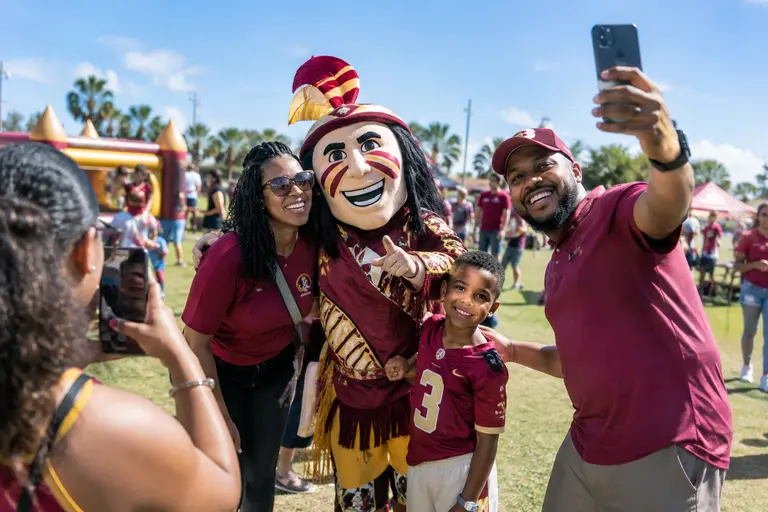
In Tallahassee, recruiting is public business in a sports sense. Hotels, restaurants, campus tours, booster events and local conversation all pick up when the Seminoles are gaining momentum. When recruiting slips, the unease is just as visible. Families want to know whether the staff will remain in place. Donors want to know whether investments are producing roster gains. Players already on campus want to know whether development will be rewarded or replaced.
That is why this administrative reset reaches past the athletic department office. The football program is one of the city’s biggest identity markers. A clearer FSU recruiting strategy can calm the noise around the program and give coaches a cleaner message in living rooms, high school offices and transfer conversations.
ACC Pressure Raises The Stakes
The ACC recruiting picture made the challenge tougher. The research notes placed FSU sixth among conference programs in 2027 recruiting as of September 2026, behind programs that included Miami, Clemson and Virginia Tech. Even if rankings shift, the signal is plain enough: Florida State was not operating from a position of clear conference recruiting control at that point.
That matters because ACC competition is not only about the top of the roster. It is about second-team offensive linemen, developmental defensive backs, rotational pass rushers and special teams athletes. If FSU misses too often in those layers, the result shows up months later in practice quality and late-game depth. For a deeper local view of the athletic department change, our site’s related analysis on FSU’s AD change tracks how the same leadership questions can touch other Seminoles programs.
Why FSU Recruiting Strategy Matters In Tallahassee
The Practical Test After The Shakeup
The practical test is not whether Florida State can announce new titles or win a few public commitments. The test is whether the program can reduce avoidable portal losses, retain the right players, raise the high school class ceiling and present a consistent plan while interim leadership is in place. That is a hard task, but it is also the right one to measure.
There is uncertainty because the administrative change was recent as of October 24, 2026. Warwick’s interim leadership may steady operations, but the long-term athletic director decision had not been supplied in the research. The 2027 recruiting class still had time to move, and rankings can change. The supported data, though, points to a program that needed sharper alignment after a heavy portal cycle and a softer-than-desired high school ranking.
For Florida State supporters, the key is patience with proof attached. Watch roster retention, not just commitment graphics. Watch whether four-star defenders stay in the program. Watch whether the staff can rebuild trust with Florida high school coaches. If those indicators improve, FSU recruiting strategy will look less like damage control and more like a corrected plan. If they do not, the administrative shakeup will remain only the first step in a much larger football problem.