
FHSAA Sanctions after the Deltona-Matanzas postgame brawl on October 1, 2026, did more than close a disciplinary file. They changed the competitive math for two football programs, removed postseason access for 2026, and pushed local schools to treat the final whistle as part of game management rather than a loose emotional release.
The game itself was a makeup contest from a September 4 postponement. Deltona defeated Matanzas 21-12 on October 1, 2026. After the game, the research record says a Matanzas player shoved a Deltona player out of the handshake line, and multiple players from both teams then joined escalating altercations across the field. By October 8, 2026, the FHSAA had placed Deltona, then 3-3, and Matanzas, then 1-5, on restrictive probation for the 2026 season. That status barred both from postseason play.
For Deltona, the punishment landed while the team still had a path to compete for a playoff position. For Matanzas, the standings impact was less direct because the team was already out of playoff contention, but the roster and community impact was immediate. The case now sits as one of the clearest 2026 examples of how sportsmanship enforcement can affect playoff access, roster availability, and public trust around high school football.
How FHSAA Sanctions Changed The Season
Immediate Competitive Damage
The most measurable effect was the loss of postseason eligibility. The FHSAA’s restrictive probation removed Deltona and Matanzas from the 2026 postseason race after the October 1 game. That mattered because Deltona was 12th in Region 2-4A at the time of the sanction and had not been eliminated from contention. Matanzas had a different competitive profile at 1-5, yet the penalty still affected the rest of its schedule, roster structure, and weekly preparation.
The player discipline was also broad. The FHSAA suspended 41 players tied to the Deltona-Matanzas game, including players from both teams, On3 reported. Matanzas accounted for 20 of those suspensions in the research record: six players received five-game suspensions, three received two-game suspensions, and 11 received one-game suspensions. The five-game penalties carried into the first game of 2027 because Matanzas did not have five games left in the 2026 season.
That kind of discipline hits a football team at several levels. Starters are removed. Backup roles become starting roles. Junior varsity players can be asked to fill varsity snaps before they are ready for the physical and decision-making speed of the game. Matanzas felt that immediately on October 8, 2026, when it played Buchholz with a patched-together group of varsity and junior varsity players and lost 48-0.
A Program Penalty, Not Just A Player Penalty
High school discipline is often framed around individual accountability, but this case showed the program-level stakes. A single postgame sequence contributed to lost playoff access for two teams, including players who may not have been central to the fighting. That does not erase individual responsibility. It does show why sideline control, handshake-line supervision, and end-of-game staffing are competitive issues as much as behavioral ones.
Deltona and Matanzas had the right to appeal the restrictive probation decisions, according to the research record. Still, the initial sanction sent a direct message: the FHSAA was willing to attach postseason consequences to bench-clearing or multi-player altercations. For readers tracking the team-by-team impact, our related coverage of how FHSAA penalties hit Deltona and Matanzas examined why October became less about standings and more about discipline, depth, and trust.
FHSAA Sanctions And The Handshake Line
FHSAA Sanctions In A Postgame Setting
The Deltona-Matanzas case places the handshake line under sharper review. Handshakes are supposed to mark respect after competition, yet the research record says the conflict began there. That matters because coaches and administrators often focus on game action, officiating decisions, and sideline control during live play. This case showed that the risk window can remain open after the clock reaches zero.
FHSAA Sanctions in this setting should make schools examine who supervises each phase after a game: the crossing of teams near midfield, the spacing of players, the movement of benches, and the timing of staff intervention. Those details may sound small, but they are tied directly to whether athletes leave a heated game with structure or with open space for emotions to escalate.
The broader pattern in 2026 also matters. At least five Florida high school football programs had been barred from postseason participation due to involvement in bench-clearing altercations during or after games, Yahoo Sports reported. That figure suggests the Deltona-Matanzas penalty was not an isolated warning. It fit a stricter enforcement posture during the 2026 football calendar.
Local Culture And Rivalry Pressure
Local football carries more than a scoreboard. It includes family attendance, school identity, marching bands, youth players watching older athletes, and alumni measuring progress from week to week. When a postgame brawl becomes the lead story, the community cost is wider than a forfeited playoff path. It changes how families talk about a program and how younger players understand acceptable conduct.
That does not mean local rivalries should lose intensity. Rivalries help drive attendance and give players meaningful games. The issue is whether programs can separate intensity from escalation. The Deltona-Matanzas incident made that line clear: hard play during a 21-12 result did not create the sanction by itself. The postgame conduct did.
Effects On Players, Coaches, And Communities
Roster Depth And Player Development
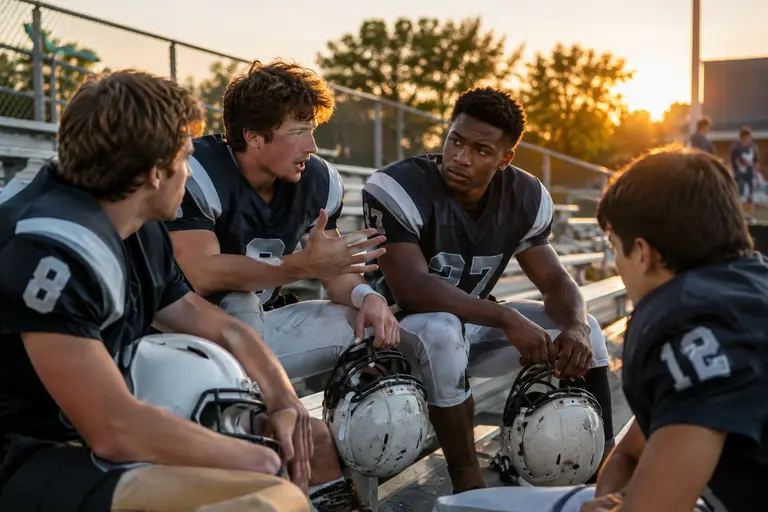
Suspensions reshape player development in ways that box scores do not fully show. Players serving multi-game penalties lose live reps, film opportunities, and the rhythm of weekly preparation. Younger replacements gain experience, but often in circumstances shaped by crisis rather than planned development. Matanzas entering the Buchholz game with many leading rushers and starters unavailable is a clear example from the research record.
The 48-0 loss to Buchholz on October 8, 2026, should be read with that context. It was not only a lopsided result. It was a snapshot of how discipline can alter competitive balance in a single week. Coaches had to reassign roles. Players had to take snaps outside the normal depth-chart plan. Families and supporters saw the football cost of conduct that happened after the prior game had already been decided.
Coaching Control After The Whistle
The case also raises practical coaching questions. Who leads players through the handshake line? Which assistants monitor the back of the line? How quickly are emotional players separated? Are captains trained to walk away from provocation? These are not legal questions here; they are football operations questions tied to eligibility and program reputation.
FHSAA Sanctions make those questions harder to ignore. A staff can spend months building a postseason case through conditioning, scouting, and Friday night execution, then lose that opportunity through a brief breakdown after the game. That is why sportsmanship education cannot be treated as an assembly-only topic. It has to be practiced like special teams spacing or sideline substitution rules.
Why The Deltona-Matanzas Case Matters
The Deltona-Matanzas brawl became a warning point for Florida high school football because the punishment reached three levels at once: individual suspensions, team postseason access, and public confidence. For Deltona, the restrictive probation cut off a possible playoff push. For Matanzas, it deepened an already difficult season and forced immediate roster patching. For both communities, it attached their school names to an incident that overshadowed the 21-12 result.
The strongest lesson is not that rivalry emotion should disappear. It is that programs now need a firmer plan for the moments after competition ends. The final whistle does not end responsibility for athletes, coaches, or administrators. In 2026, FHSAA Sanctions showed that postgame conduct can carry the same season-altering weight as anything that happens between kickoff and the last snap.