
The Florida Poly Tigers partnership was announced on September 8, 2026, and it was already in effect as of October 13, 2026. For Florida sports education, that timing matters: this is not a future concept waiting for approval, but a working collaboration between Florida Polytechnic University and the Detroit Tigers tied to player health, performance science, and data analytics Florida Poly announcement.
I’m excited about the local angle here, but caution belongs in the same sentence. The project connects a STEM-focused public university in Lakeland with a Major League Baseball organization that uses Lakeland as a Spring Training base. That does not guarantee better draft picks, fewer injuries, or instant career tracks for students. What it does create is a verified bridge between academic research and professional baseball decision-making.
The early structure is clear enough to analyze. A full-time associate professor in data science and sport analytics will be embedded within the Tigers’ Performance Science group at the club’s Spring Training facility in Lakeland, while also teaching and helping build curriculum at Florida Poly. That dual assignment is the heart of the sports education story.
What Florida Poly Tigers Changes In Lakeland
Florida Poly Tigers Research Base
The Florida Poly Tigers collaboration gives Lakeland a rare sports education case study: an academic researcher working inside a professional performance group while remaining tied to classroom instruction. For a city that already carries baseball visibility through Spring Training, this shifts part of the local sports conversation from fields and fan traffic toward research, data, and player support systems.
The official aim is to merge data science, academic research, and sport analytics to improve player health and performance. That wording is important because it is broad but not empty. It points to work that could inform how the Tigers evaluate physical stress, injury risk, and performance signals. Still, the partnership should be judged by what can be measured over time, not by slogans.
The Lakeland Hub
The Tigers’ Performance Science group at the Lakeland Spring Training facility serves as the physical hub for the partnership. That location gives the arrangement a Florida identity beyond a university press release. The applied work is not detached from athletes, baseball staff, or training decisions. It sits near the club environment where performance questions can be studied with professional context.
For local sports fans, that makes Lakeland more than a seasonal baseball stop. It positions the city as a testing ground for how Florida STEM programs can connect with elite player development systems. The scale of that effect is still uncertain, but the structure is more concrete than a broad sponsorship or branding agreement.
How Research Moves From Lab To Clubhouse
Predictive Models With Caution
The first phase includes two main research projects. One focuses on predictive models for injury risk using players’ injury histories, biomechanics, and physical capabilities. That is sensitive work, and it should be discussed carefully. Predictive modeling can help staff ask better questions, but it does not remove uncertainty from player health. Baseball bodies do not behave like fixed formulas.
This is where the embedded professor model matters. Academic research can help separate useful patterns from noise, while performance staff can test whether those patterns mean anything in a club setting. Dr. Georgia Giblin, the Tigers’ Vice President of Health and Performance, said the partnership strengthens the team’s ability “to translate research into real decisions for our players” Tigers and Florida Poly release.
Pitcher Mechanics In Simulation
The second project is centered on individualized virtual models that simulate how changes in a pitcher’s mechanics may affect performance or physical stress. That topic lands squarely in modern baseball’s development lane. Pitching performance is tied to movement, workload, timing, and repeatability, and the research aims to model those links before decisions are made in training settings.
The Florida Poly Tigers work may also inform signing and draft decisions, according to the announcement. That detail is significant, but it needs a careful read. Research can support decision-makers; it should not be framed as replacing scouts, coaches, medical professionals, or front-office judgment. The most credible version of this partnership is one where data becomes another disciplined input, not a magic answer.
Florida Sports View has tracked this same Lakeland connection as part of the wider sports science discussion, including how the Florida Poly Tigers partnership could test the practical value of research in player support.
Student Pathways And Local Sports Education
Classroom Exposure Without Overpromising
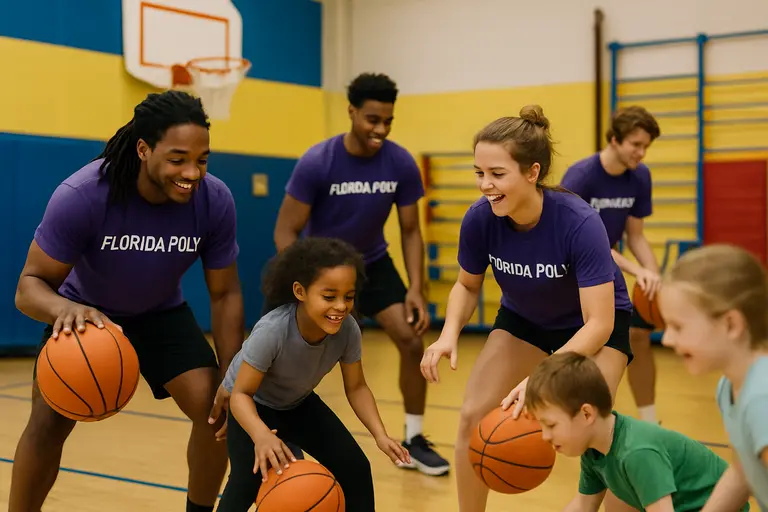
Florida Poly students are expected to gain exposure to emerging fields in sports science and data analytics through research tied to professional athletics. That is the most direct Florida sports education benefit. Students can see how data science concepts connect to athlete monitoring, performance questions, and organizational decision support.
The key is not just access to a pro sports brand. The value is in the assignment of real research problems. A student who studies predictive modeling in a classroom may understand the math. A student who sees how injury history, biomechanics, and physical capability data are treated in a professional baseball environment may better understand the limits, ethics, and pressure around applied analytics.
Talent Pipeline And Community Meaning
The Florida Poly Tigers partnership also fits a broader local workforce story. Florida Poly President Dr. Devin Stephenson described the arrangement as having potential to build a “strong pipeline of talent” for both the university and the Tigers over the years after the September 8, 2026 announcement. That phrasing should be read as an ambition, not a completed result.
For Lakeland, the community impact could come through visibility for STEM programs, student career exploration, and a stronger identity as a sports science location. It may also help families and high school students view sports careers beyond coaching, playing, or front-office roles. Data science, biomechanics, sport analytics, and research operations are part of the modern sports workforce, and this partnership brings those fields closer to home.
There are limits. The public announcement does not provide student head counts, job placement targets, research publication plans, or player outcome metrics. Without those numbers, any claim about measurable success would be premature. The fair read is that Florida Poly and the Tigers have created a serious framework, while the evidence of long-term results will depend on what the research produces and how students are included.
Why Florida Poly Tigers Matters In Lakeland
A Sports-First Education Signal
The strongest part of the Florida Poly Tigers story is its fit with Florida’s local sports identity. Lakeland already has a baseball connection through the Tigers’ Spring Training presence. Florida Poly brings STEM expertise, especially in data science. Together, they create a sports-first education model rooted in a real place, not an abstract lab setting.
That matters because player development is no longer only about batting cages, bullpen sessions, and weight rooms. Those still matter deeply, but teams also need people who can interpret movement data, stress signals, physical capabilities, and performance trends. Florida Poly’s role gives students and faculty a doorway into that part of the game.
What Should Be Measured Next
As of October 13, 2026, the partnership was active, but its most meaningful results were not yet publicly quantified. The next credible indicators would be research outputs, student participation details, curriculum changes, and any documented ways the Tigers use findings in performance planning. Those measures would tell us whether this becomes a lasting Lakeland sports education asset.
The enthusiasm is real, and as a Florida sports reporter, I love seeing a local university step into a serious baseball performance project. The cautious takeaway is just as important: the partnership has strong ingredients, but its success should be evaluated through verified outcomes, not early excitement.