
Florida Youth Sports has moved from a participation story into a community planning story. The most encouraging numbers come from girls’ high school sports, where Florida recorded 136,857 female athletes in the 2025-26 academic year, a state record. That growth is not abstract. It shows up in school gyms, wrestling rooms, flag football fields, travel budgets and family calendars across the state.
I get fired up by those numbers because they suggest more athletes are finding teams that fit them. Still, the careful read matters. Participation growth does not prove every neighborhood has equal access, and statewide totals can hide gaps by county, income, transportation and facility availability. The best question for Florida communities is not just whether more students are playing. It is whether local programs are building a repeatable path from early interest to high school competition.
Florida Youth Sports Growth By The Numbers
What Florida Youth Sports Data Shows
Florida’s 2025-26 girls participation figure was not a small step. Girls made up 43.9% of all athletic participation in FHSAA-regulated sports, compared with 38.8% in 2006, according to Jacksonville girls sports reporting. That shift matters because share of participation is often more revealing than raw headcount. A rising percentage means girls were not only gaining athletes; they were gaining ground within the total high school sports structure.
For Florida Youth Sports, the key signal is breadth. Growth was not tied to only one sport. Girls flag football reached 12,424 players in 2025-26, up 66.5% compared with 2016. Girls wrestling grew from 295 participants in 2016 to 2,328 in 2026 after the FHSAA sanctioned girls wrestling as a distinct sport. Girls indoor volleyball reached 20,146 participants in 2025-26 after a 15% rise over the prior decade. Those gains point to a wider menu of competitive options, which is often what keeps students engaged through high school.
A Cautious Reading Of The Record High
The numbers also invite caution. A record high for girls’ participation is a strong indicator, but it does not by itself tell us how many first-time athletes stayed for multiple years, how many schools added teams, or how travel costs affected roster spots. Local participation can rise when a sport gains sanctioning, when schools add coaching support, or when community groups pay for travel. Without county-level data in the research provided, it would be too strong to say every part of Florida benefited equally.
That said, the direction is meaningful. A sport such as girls wrestling needed both formal recognition and local buy-in. Flag football needed coaches, fields, schedules and opponent networks. Volleyball needed gym access and enough trained adults to support rising demand. Those are not automatic outcomes. They come from school administrators, parks departments, booster groups, nonprofit organizers and families making the calendar work.
How Local Programs Turn Access Into Teams
Reducing The Cost Of Staying In The Game
Local programs are often the bridge between interest and participation. In Northeast Florida, the research points to tournament funding, travel stipends and scholarship programs tied to the rise of girls flag football. Those supports may sound practical rather than glamorous, but they matter. A player who cannot pay for travel, equipment or tournament fees can be lost before a coach ever sees her develop.
For families, Florida Youth Sports is shaped by small access points: whether practice is close enough after school, whether there is transportation, whether fees are manageable, and whether a young athlete sees a clear next step. A high school roster is usually the visible part of a longer path. Before that roster spot, many students need recreational leagues, middle school exposure, camps, clinics and adult mentors who keep them connected.
Why Pathways Matter Across Sports
The same access question applies beyond girls sports. Soccer, football, track, tennis and golf all require different facility and cost structures. A low-cost sport can still become hard to sustain if practice times conflict with family transportation. A facility-heavy sport can struggle if public courts, gyms or fields are limited. That is why local programs should be judged not only by signups, but also by retention, coaching consistency and the ability to move athletes from beginner levels into school competition.
Florida has already seen how organized pathways can draw large youth interest in other sports. The statewide demand around Florida ODP tryouts offers a useful parallel: when families can identify a pathway, participation pressure rises quickly. The same pattern can apply to flag football, wrestling or volleyball when communities make the next step visible and affordable.
The Sports Showing The Clearest Gains
Flag Football And Wrestling Lead The Conversation
Girls flag football is one of the clearest examples of how a sport can grow when school competition, community support and cultural familiarity line up. Florida’s 12,424 girls flag football players in 2025-26 represented a major rise from 2016. The sport benefits from a football identity that many Florida communities already understand, while offering a different participation model for girls who may not have seen themselves in older school sports structures.
Girls wrestling tells a different but equally important story. Moving from 295 girls in 2016 to 2,328 in 2026 suggests that sanctioning can change behavior. Once athletes have a distinct championship path, schools have a stronger reason to recruit, schedule and train with intention. Coaches can speak to girls as wrestlers in their own competitive division, not as exceptions inside a boys-dominated room.
Basketball Stability Still Counts
Basketball deserves a careful note. Nationally, girls basketball participation fell from about 451,600 in 2000 to about 356,240 in 2025, according to an AP basketball participation report. Florida, by contrast, was described in the research as fractionally higher in 2025-26 than in 2016. That is not the same as explosive growth, but stability in a sport facing national decline is still meaningful.
For coaches and athletic directors, that stability may signal that basketball remains a durable entry point for girls, especially in schools where gym access, coaching tradition and peer interest are already present. It also raises a practical question: can basketball borrow lessons from flag football and wrestling by improving local outreach, lowering cost barriers and creating more beginner-friendly on-ramps?
What The Participation Shift Means For Communities
Schools Need Capacity, Not Just Interest
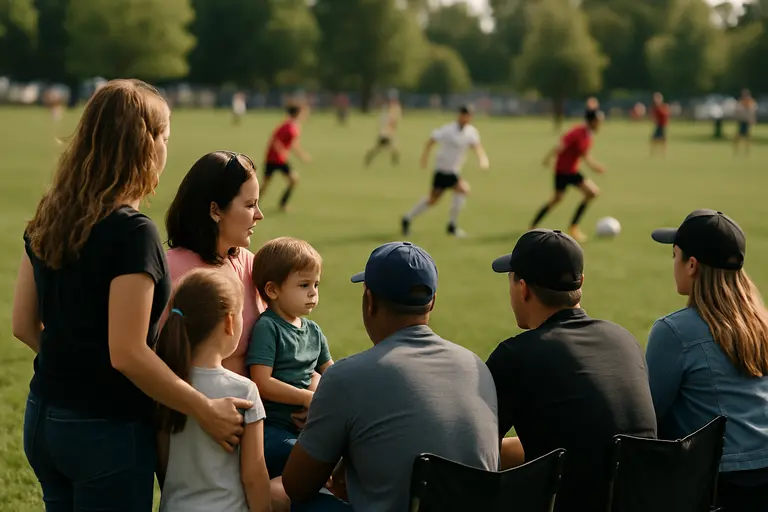
Participation growth brings real operational pressure. More athletes need more practice slots, more officials, more coaches, more transportation and more safe spaces to train. A school can celebrate larger rosters, but if facilities are tight, the experience can suffer. That is where local government, school districts and community organizations become part of the sports story.
The 2023-24 FHSAA participation survey cited in the research counted 299,383 student-athletes across 19 sports in grades 9-12, with member-school enrollment of 873,804 students. That ratio shows both the size of the high school sports system and the room still available for growth. Not every student wants organized sports, of course, but every barrier removed gives more students a fair chance to choose.
Community Identity Follows The Teams
Sports participation also shapes local identity. A new girls wrestling room can change how a school sees toughness and leadership. A strong flag football program can bring families to fields on nights that once belonged to other sports. Volleyball growth can pack gyms and create new rivalries between nearby schools. These are not just roster counts; they are community touchpoints.
The economic effect should be discussed with care because the research does not provide spending totals. Still, tournaments and travel create activity for venues, restaurants and local services. The more reliable claim is simpler: participation growth increases demand on community sports infrastructure. If cities and schools plan well, that demand can support healthier schedules, better facilities and stronger athlete development.
Why Local Programs Matter For Florida Youth Sports
The Next Test Is Equity Of Access
The data from 2025-26 gives Florida a strong participation story, especially for girls. The next test is whether growth reaches students who face higher barriers. Scholarship programs, travel stipends and tournament funding are not side details. They are often the difference between a promising athlete joining a team or staying home.
If Florida Youth Sports keeps growing, the strongest communities will likely be the ones that connect schools, parks, volunteer coaches and local funders with clear goals. The goal should be more than one record year. It should be steady participation, better retention and enough entry points for athletes who discover their sport late.
That is the exciting part for Florida sports people like me: the numbers already show momentum, but the next gains will come from decisions made close to home. A new middle school clinic, a funded tournament trip, a safe practice slot, or a coach who recruits beginners can shape the next roster. Florida has evidence of growth. Now each community has to decide how much access it is willing to build around that demand.