
The Liam Peterson signing gave Florida Gators baseball a clean end point to one of its most important 2026 player development stories. Cleveland selected Peterson with the 19th overall pick on July 11, 2026, and he signed two weeks later for the full slot value of $4,530,500. Those two dates turned a Gainesville power arm into a Guardians investment, while leaving Florida with both a roster hole and a recruiting message.
For the Gators, this was not just a draft-night headline. Peterson left campus after 216 2/3 collegiate innings, 47 starts and 50 total appearances. His final Florida record requires some restraint in how it is read: a 5.03 career ERA is not the profile of a finished major-league product, but the strikeout totals, frame and pitch traits explain why Cleveland bought into the ceiling. That tension is the real story.
Why The Liam Peterson Signing Matters In Gainesville
The Draft Date Set The Program Marker
Florida’s official release stated that Cleveland chose Peterson 19th overall in the first round on July 11, 2026, making him the program’s 21st first-round pick, or 27th when older secondary-phase picks are included, according to Florida’s draft announcement. That placement matters because first-round picks are public scoreboards for college development systems. They tell recruits, parents and professional scouts which programs can move players from projection to premium draft capital.
Peterson also became the fifth-highest-rated pitcher and 10th-highest player selected in Florida baseball history. That is a narrow but useful measure. It does not mean he was one of the most productive pitchers in program history by college results alone. It means MLB valued the traits, age, body type and performance signals enough to pay first-round prices. For a college staff, that distinction can be useful in living rooms and bullpens alike.
The Local Impact Beyond The Box Score
Gainesville baseball has long drawn energy from the idea that a weekend series at Condron Family Ballpark can be the first look at a future professional player. Peterson’s move reinforced that identity. For local families, youth coaches and high school pitchers in Florida, a player going from SEC starts to a first-round signing gives the development path a nearby reference point.
The Gators also lost a recognizable starter who carried Friday-level visibility at times, even if his performance line had peaks and rough patches. That departure changes how Florida must allocate innings after July 2026. It creates opportunity for the next arm, but it also removes a pitcher who had already handled SEC lineups, road venues and the pressure attached to a high-profile staff role.
Liam Peterson Signing And The Draft Profile
Liam Peterson Signing By The Numbers
The Liam Peterson signing became official on July 24, 2026, when he joined Cleveland for the full slot value of $4,530,500, according to MLB’s signing report. The bonus number is important because full slot value signals that Cleveland was not treating him as a discount pick. The Guardians paid him like the 19th overall selection, which fits the way his physical tools were discussed through draft coverage.
His junior season gave teams a larger sample to study. In 2026, Peterson made all 16 scheduled starts and finished with a 4.59 ERA, 1.42 WHIP, .258 opponent batting average, 111 strikeouts and 36 walks over 84 1/3 innings. Those numbers show both the appeal and the risk. The strikeouts point to swing-and-miss ability. The WHIP and walk total show why evaluators may still view command consistency as part of his pro development plan.
Within the SEC, Peterson ranked eighth in total strikeouts, ninth in games started and 13th in strikeouts per nine innings at 11.9. That matters in context. The SEC is not a soft landing for pitchers; it tests fastball command, secondary pitch feel and response to damage. A pitcher who misses bats at that rate in league play tends to get attention, even when run prevention is uneven.
Pitch Mix And Physical Traits
Peterson’s frame is central to his profile. At 6 feet 5 and 225 pounds, he brought the size teams often associate with starting-pitcher durability, though durability in professional baseball still has to be earned over longer schedules. His fastball sat in the mid-90s and touched 98-99 mph. He also carried three secondary pitches: an upper-80s high-spin slider, a mid-80s changeup and a curveball around 80 mph.
That combination gave Cleveland several routes to work with. If his fastball command tightens, he has the ingredients to stay in a rotation. If the strike-throwing gains stall, the velocity and slider could still create another role. Florida’s job was to expose him to high-end college bats and build the pitch foundation. Cleveland’s job became more specific after the signing: refine usage, sharpen location and test how the arsenal plays against professional hitters.
What Florida Loses On The Mound
Replacing SEC Innings Is Not Simple
For Florida, the Liam Peterson signing removed a pitcher who had already absorbed a full SEC starter workload. Innings are not all equal. A midweek inning against a thinner lineup does not teach the same lessons as a road start in Baton Rouge or a late-season conference game with postseason stakes. Peterson’s 47 career starts gave the staff a known planning point, even when his outcomes varied.
His May 15, 2026 complete game at LSU showed the high end of that experience. In a seven-inning, 11-1 run-rule win, Peterson finished his first career complete game and helped Florida clinch the series. One outing should not be inflated into a complete evaluation, but it did show why his arm drew first-round interest: power stuff, efficiency in a favorable game script and the ability to carry a start without immediate bullpen cover.
Development Value For The Next Gators Arm
The next Florida starter will inherit more than a rotation spot. He will inherit the expectations that come with a program that regularly sends pitchers and position players into the draft. That can be demanding, but it can also clarify the standard. Peterson’s path showed that a pitcher does not need a spotless college ERA to attract major professional investment if the underlying traits keep advancing.
- Recruiting signal: Florida can point to another first-round arm developed in Gainesville.
- Roster challenge: The staff must replace SEC starts, strikeouts and experience.
- Player-development lesson: Strikeout growth and pitch quality can outweigh surface inconsistency for scouts.
The caution is that not every projectable arm becomes a first-round pick. Peterson’s size, velocity and draft-year strikeout production formed a specific case. Florida can use the example, but it still has to build the next pitcher individually rather than sell one template to every recruit.
What Cleveland Saw In The Gators Right-Hander
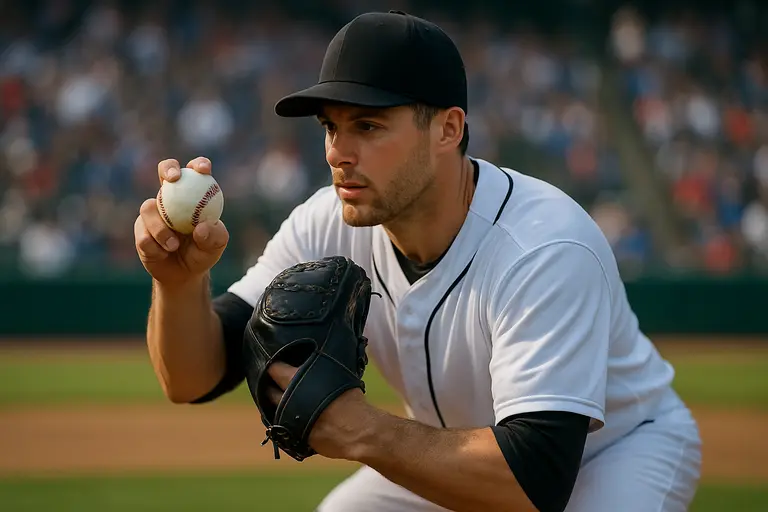
A First-Round Pitcher After A Five-Year Gap
For Cleveland, Peterson was its first first-round pitcher since Gavin Williams went 23rd overall in the 2021 MLB Draft. That detail gives the selection extra weight inside the organization’s draft pattern. It does not guarantee a fast climb, but it does show that Cleveland used a premium pick on a college arm it believed could fit its pitching model.
The Guardians likely saw a pitcher whose raw ingredients were more convincing than his career ERA. A mid-90s fastball that reaches the upper 90s can change the margin for error. A high-spin slider in the upper 80s gives him a chase pitch. The changeup and curveball create starter depth if they become reliable against opposite-handed hitters and through a lineup multiple times.
Why The Risk Still Matters
The college line still matters. A 5.03 ERA across 216 2/3 innings is not a small detail. A 1.42 WHIP in his junior season points to traffic, and 36 walks in 84 1/3 innings show that command will be part of the professional checklist. The Guardians paid for upside, not certainty.
That is why the Liam Peterson signing should be viewed as a development bet with strong evidence behind it, rather than a finished evaluation. Cleveland gained a large-framed power arm with SEC experience and strikeout production. Florida gained proof that its pitching pipeline can still produce first-round outcomes, even when the college stat sheet includes uneven stretches.
Why Liam Peterson’s Move Shapes Gators Baseball
The Liam Peterson signing now sits at the intersection of individual advancement and program identity. Peterson turned college innings into first-round draft status and a full-slot contract. Florida turned another high-profile arm into a professional case study. Cleveland took on the next stage of his development with a clear financial commitment.
For Gainesville, the most grounded takeaway is not hype. It is continuity. Florida lost a starter with size, velocity and SEC strikeout production, but the program also gained another example it can present to future pitchers from across the state. That affects recruiting conversations, fan expectations and the way local baseball people judge the Gators’ player-development record.
The Liam Peterson signing did not answer every question about his long-term role. It did confirm that the traits built and tested at Florida were valuable enough for Cleveland to invest at the top of the draft. For a Gators program measured by wins, development and draft results, that is a meaningful marker from July 2026.