
In the world of college football, excitement grows as youthful talent emerges. It’s not just about the game; it’s about the future. The players in the spotlight are changing the game and giving fantasy fans new chances to win.
Imagine a team with a young core that can change the game’s outcome. These athletes bring energy and creativity, like the greats of the past. But, how do they fit into our fantasy teams?
We’ll look at the stats and stories of these players. We’ll see how they play and their impact on the game. Their performances and strategies could change what we expect from college football’s best.
Offense identity guard led pace spacing high pick and roll
Miami’s offense is a mix of fast-paced guard-led plays and smart spacing. It’s like a point guard leading a fast break, but with run-pass options that keep defenses on their toes. This approach is unique in college football.
The Hurricanes are changing the game with their spread-to-pass strategy. It’s similar to the Golden State Warriors’ basketball style. Their pick-and-roll plays freeze linebackers, opening up big opportunities for explosive plays.
So far, defenses are struggling to keep up. They’re dropping extra defenders to cover, showing the Hurricanes’ impact. The big question is: can they perform under the pressure of a packed stadium?
The NIL era also plays a role. Players are now building their personal brands. This affects how they play and is important for fantasy football.
| Offensive Metric | Current Value | Comparison to Last Season |
|---|---|---|
| Points per Game | 32.5 | +4.5 |
| Yards per Play | 6.8 | +1.2 |
| RPO Efficiency | 78% | +10% |
Player breakdown primary creator spot up sniper small ball 5 usage and efficiency
Imagine a primary creator as the sun, pulling everything towards them. In Miami’s offense, this role is not just about scoring. It’s about creating chances for others.
When the primary creator gets the ball, teammates get better spots. This leads to more efficient plays.
Think of the “spot-up sniper.” This player waits on the edges for the right shot. Like Kelly Oubre with Curry, Miami’s shooters get their chance when defenders focus on the primary creator.
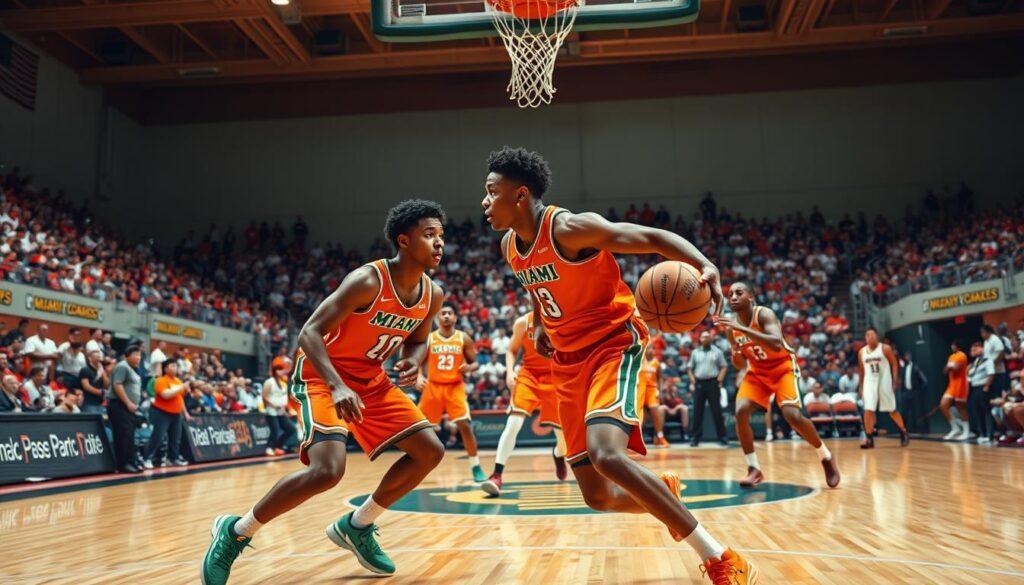
The “small ball 5” is fascinating. It’s a player too fast for bigs and too strong for guards. Miami’s tight ends or big slots fit this role well. They make it hard for linebackers and safeties to keep up.
Usually, more touches mean less efficiency. But clever schemes can change that. Miami’s young players are getting a lot of touches and doing well with them.
Are we seeing a team like Jusuf Nurkic’s bubble team? It’s too soon to say, but the numbers look promising. For more on player performance, check out this link.
Betting angles overs vs specific defenses switch drop zone
Betting on college basketball is more than just the teams. It’s about knowing the defensive plans. The Miami Hurricanes use a spacing-based offense. This can do well or poorly, based on the defense they face.
A defense that switches often tries to avoid bad matchups. On the other hand, a drop zone defense looks for space underneath. Miami’s offense can find scoring chances in drop coverage.
But, switch defenses can mess up Miami’s timing. Looking at game logs shows a clear pattern. Overs are more likely when defenses use zone over switches.
The “drop” in drop zone creates space for Miami to score easily. Here’s a table to show this:
| Defensive Scheme | Average Points Scored by Miami | Overs Hit Percentage |
|---|---|---|
| Switch Defense | 68 | 45% |
| Drop Zone Defense | 82 | 75% |
| Mixed Defense | 75 | 60% |
Before betting on overs, check the defense’s strategy. Your money might thank you, or it might not. For more on betting, see Florida College Basketball Rising Stars.
Prop targets 3PA FT attempts APG rebounds for small‑ball 5
The small-ball 5 in Miami’s offense is a goldmine for prop betting. This role fits perfectly into betting, where smart players can use guard usage to their advantage.
Let’s look at how these prop targets work. Three-point attempts (3PA) for a small-ball 5 are like deep passes in football. They open up the floor, giving others more chances to score.
Free throw attempts (FT attempts) are like red-zone plays. A small-ball 5 can draw fouls in the paint, turning those chances into key points. Assists per game (APG) show how often they help set up plays.
Rebounds for small-ball 5s are like receptions for a hybrid tight end/slot receiver. They’re not just rebounding; they’re key to the game’s flow. The guard usage angle is very important. When a quarterback focuses on this hybrid player, it shows a strong strategy commitment.
Here’s a quick overview of how these stats translate into prop bets:
| Basketball Stat | Football Equivalent | Importance in Prop Betting |
|---|---|---|
| 3PA | Deep Targets | Creates scoring opportunities |
| FT Attempts | Red-Zone Touches | Crucial for point accumulation |
| APG | Targets/Carries | Highlights playmaking ability |
| Rebounds | Receptions | Integral to game flow |
In prop betting, knowing why the numbers matter is key. It’s more important to track target share than just count receptions. Focusing on red-zone looks over touchdowns is where the real value is. Those who dig deeper into these props will find the best opportunities.
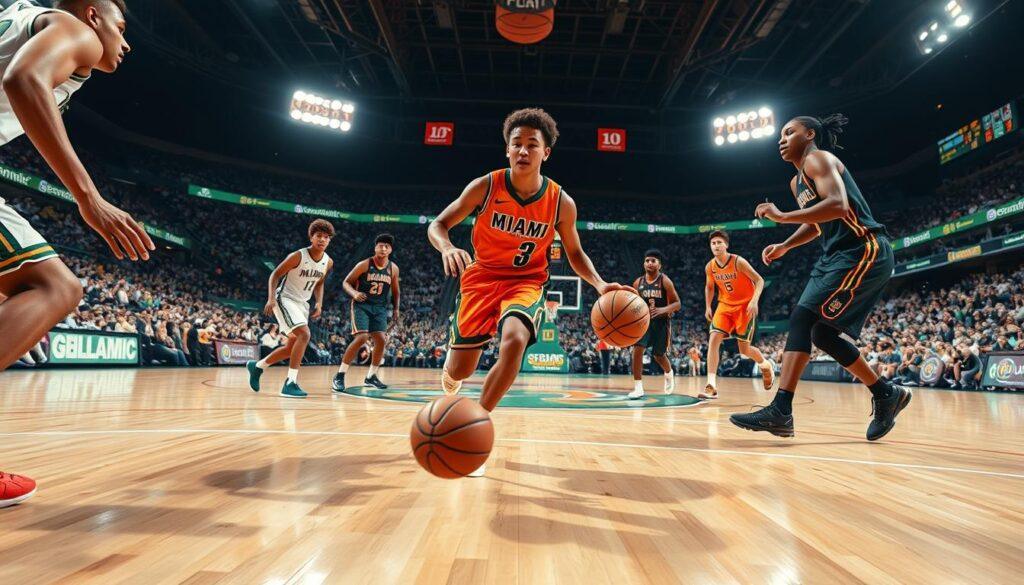
DFS stacks creator + roller correlation late night hammer strategy
In DFS, knowing the creator-roller dynamic is key. It’s about how a primary creator, like Damian Lillard, works with a roller, like Jusuf Nurkic. Their fantasy scores go up together, boosting your chances.
This idea works in many sports, not just basketball. In football DFS, pairing a quarterback with his top receiver or tight end is smart. Their success often goes hand in hand. This is true in basketball too, where a creator’s pass often leads to a roller’s score.
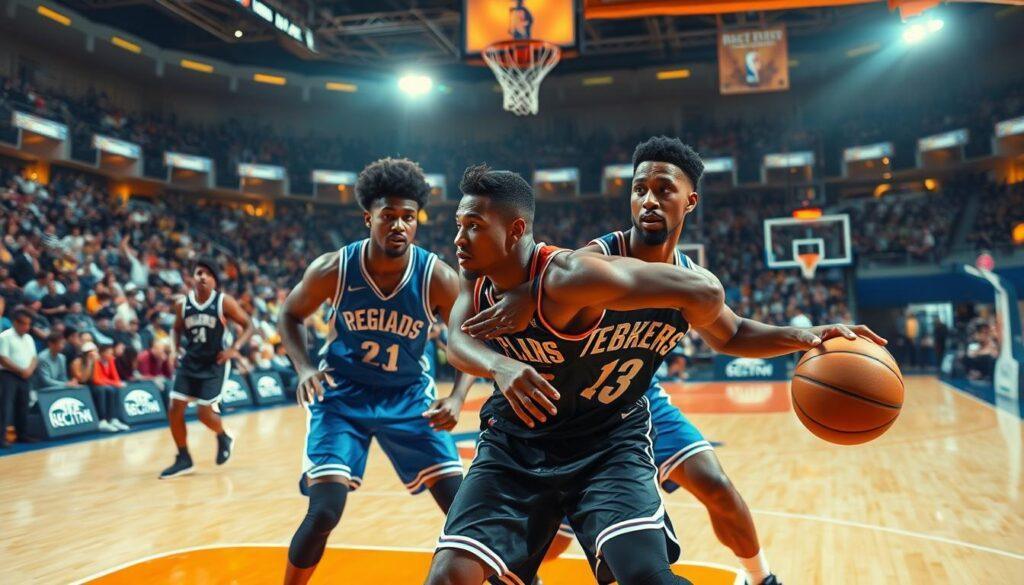
The “late night hammer” strategy is very appealing. It’s about the late NBA games on the West Coast that don’t get much attention. These games offer a chance to find hidden gems at lower prices and with less competition.
- Stacking Strategy: Pair your primary creator with their favorite roller.
- Maximize Correlation: Look for players whose scoring opportunities are closely linked.
- Late Night Advantage: Exploit the softer pricing in late games.
In the ACC’s late Saturday games, this strategy really pays off. With fewer people watching, you can outsmart others. So, whether it’s a top WR on play-action passes or a tight end catching a pass from the backfield, teaming up these players can bring big rewards. Just keep some strategies to yourself.
Buy low sell high stretches schedule analysis next 10 games
The Miami Hurricanes’ upcoming games offer great chances for fantasy players. The next ten games show clear opportunities to use undervalued players. The John Wall principle comes to mind here. Players can look weak against top defenses but shine against weaker ones.
Look at the defenses Miami will face. Some teams struggle with fast-paced offenses, which is Miami’s game. Home games also tend to boost the Hurricanes’ performance. This is a perfect time to buy low, sell high on several players.
For example, the Celtics’ early season without Kemba Walker helped Jeff Teague. Miami players are facing similar situations. If your players have had tough games, don’t worry. It’s a chance to buy low.
Here’s a look at the next ten games and Miami’s defensive matchups:
| Opponent | Defensive Rating | Key Matchup | Potential Buy-Low Candidates |
|---|---|---|---|
| Team A | 105.2 | Guard Play | Player X |
| Team B | 108.4 | Fast Break | Player Y |
| Team C | 110.1 | 3-Point Defense | Player Z |
| Team D | 107.5 | Rebounding | Player W |
Miami’s schedule looks great for offense. If you’re looking for Miami Hurricanes prospects, now is the time. The chance to buy low won’t last forever. Smart players know when to act.
Quotes and film clips that match metrics
Statistics give us a starting point, but the real story is in the details. In basketball, numbers can be misleading. That’s where coach quotes and film analysis shine.
The Athletic’s beat writer roundtable offers deep insights. Coaches like Steve Nash and Frank Vogel share valuable views. Nash talks about managing the workload of stars, while Vogel highlights Schröder’s value off the ball. These comments can either back up or question the metrics we rely on.
For Miami, Shannon Dawson’s press conferences are gold. I track his comments as closely as political opposition research. When he says, “We need to get him the ball in space,” and the film shows three designed touches in the first quarter, it’s clear the metrics will follow.
The NIL era brings a new layer to analysis. Today’s players are more media-savvy and focused on their brands. When a Miami skill player talks about “expanding his route tree” in an NIL interview, it’s more than just talk—it hints at possible usage changes not yet seen in box scores.
To truly grasp the game, we must watch film clips that match the metrics. These clips confirm what the numbers suggest. But when they don’t match, they give us an edge over those who only look at stats. I watch All-22 cutups silently and coach interviews with sound on. This mix is where real insight lies. Trust, but verify—preferably with timestamps.
| Coach | Insight | Metric Correlation |
|---|---|---|
| Steve Nash | Workload management for stars | Increased efficiency metrics |
| Frank Vogel | Off-ball value of Schröder | Higher assist ratios |
| Shannon Dawson | Need for space in offense | Improved shooting percentages |
Injury notes and foul trouble history
Injuries can change a team’s game plan in unexpected ways. For example, Kemba Walker’s limited playing time helps players like Teague get more chances. Without Jaren Jackson Jr. and Justise Winslow, Kyle Anderson gets more playing time. This shows why it’s key to keep up with injury reports.
Foul trouble history is also important. In basketball, fouls can change the game’s flow. In football, penalties can mess up a team’s plans. A player with a lot of penalties can limit the offense’s options.
It’s vital to analyze these trends. A player might look good on paper, but penalties can hurt his performance. Injuries and penalties both play big roles in a player’s fantasy value.
| Player | Injury Status | Impact on Team | Fantasy Value |
|---|---|---|---|
| Kemba Walker | Minutes Restrictions | Opens up for Teague | Increased |
| Jaren Jackson Jr. | Out | Boost for Kyle Anderson | Rising |
| Justise Winslow | Out | Opportunity for Others | Moderate |
| Aaron Gordon | Shifting Position | Natural Role | Enhanced |
For more on how injuries affect players, see this analysis. Knowing these details can make all the difference in your fantasy team’s success.
Bankroll allocation and record template
To do well in betting, knowing how to manage your bankroll is key. It’s not as flashy as the game itself, but it’s vital. Without it, you might end up losing more than you win.
Just like a basketball team needs to manage its star player’s minutes, you must manage your betting budget. This is where guard usage comes in. It’s about spreading your bets wisely, like a point guard does with the ball.
Keeping a record of your bets is essential. It should track wins, losses, and how well your bets did compared to the odds. It’s important to know if your bet was smart, even if it lost. A smart bet that loses is a win for your strategy. But a bad bet that wins can hurt your bankroll big time.
Here’s a simple table template to help you keep track:
| Date | Bet Type | Units Allocated | Closing Line Value | Outcome |
|---|---|---|---|---|
| MM/DD/YYYY | Prop | 2 | +1.5 | Win |
| MM/DD/YYYY | Total | 3 | -0.5 | Loss |
| MM/DD/YYYY | Side | 1 | +2.0 | Win |
Put money into bets based on their chances of winning, not how sure you are. Keep track of everything. Check your progress every month. The goal is to make money over time, not just win one game.
Protect your bankroll like a point guard guards the ball. It’s all about focus, following the rules, and knowing one mistake can ruin everything.
Fan resources podcasts and data links
The world of college football has changed a lot, thanks to the NIL era. Fans now have many resources at their disposal. It’s important to sort through all this information carefully.
Podcasts offer deep dives into Miami Hurricanes football that regular commentary can’t match. They give fans unique insights.
The Miami sports podcast scene has a lot to offer. Shows like Five Reasons Canes and Buckets cover Miami Hurricanes football and basketball in detail. These podcasts are must-listens for any serious fan.
Advanced metrics sites also provide valuable information. They analyze player performance beyond just the box score. In the NIL era, player-generated content, like vlogs, gives fans a real look at their preparation and mindset.
By using these resources, fans can build a strong analytical toolkit. It’s not about following the loudest voice. It’s about understanding the game better. Embrace the insights of this new era. The right information can give you an edge.