Miami Hurricanes Fan Engagement has become more than a ticketing story. It is a campus participation model, a digital retention project, and a community identity effort tied to how the Hurricanes keep students, alumni, families, and local supporters connected beyond a single football Saturday. The strongest parts of the model are measurable: student attendance incentives, digital usage gains, athlete service hours, and conduct standards that help protect the game-day environment.
That mix matters in South Florida because the Hurricanes compete in a crowded sports market. Miami has pro teams, international events, year-round tourism, and deep high school recruiting ties. College programs do not hold attention by accident here. They need repeat habits, clear access points, and reasons for young fans to feel ownership. Based on the available research, Miami has built its strongest engagement strategy around those practical levers rather than relying only on nostalgia or rivalry weeks.
Miami Hurricanes Fan Engagement Starts With Students
Miami Hurricanes Fan Engagement In Student Groups
The most direct signal came before the 2026-27 school year. Miami Athletics announced the Second Annual Canes Pride Competition through the CanesUnited Student Rewards app, with $24,000 in cash prizes available to student organizations that produced the highest attendance at Hurricanes events, including a $10,000 grand prize and runner-up awards of $5,000, $4,000, $3,000, and $2,000, according to the Miami Athletics announcement.
That is not just a giveaway. It is a structure that turns attendance into a shared objective for student groups. A student organization has a reason to rally members for volleyball, basketball, baseball, tennis, or other campus events, not only the highest-profile football dates. For a department trying to build habits across a full athletic calendar, rewarding groups can be more powerful than rewarding isolated individuals because peer pressure and group identity do part of the work.
Attendance As A Habit, Not A One-Off
The key question is whether incentives create lasting behavior after the prize cycle ends. The research does not yet provide 2026-27 participation totals, so any claim about long-term retention would be premature. Still, the design is smart. It pushes students to scan in, track attendance, and connect the app experience with live events. If Miami can later show that rewarded students keep attending after competitions end, the program would become a stronger model for other college athletic departments.
For readers planning around the broader Hurricanes calendar, our related breakdown of Miami Hurricanes key dates gives useful schedule context without changing the core point here: student participation is one of the clearest foundations of Miami’s fan strategy.
Digital Tools Make The Fan Relationship Measurable
What The 2023 Website Shift Revealed
The digital side of Miami Hurricanes Fan Engagement is backed by unusually sharp reported movement. After the 2023 revamp of miamihurricanes.com, which emphasized a mobile-responsive layout, enhanced user customization, and data collection, pageviews rose by about 167%, pages per session increased by about 159%, and bounce rate dropped from about 60% to about 3% year over year, according to the WMT case study.
Those numbers deserve attention, with one caution: a case study is designed to show project success, not to answer every independent evaluation question. Even so, the scale of the reported change points to a meaningful improvement in how users moved through the site. A lower bounce rate suggests fans found more reasons to stay. More pages per session suggests a stronger path from schedule checks to rosters, ticketing information, stories, or other team pages.
App Personalization And Data Caution
The official Hurricanes app, based on the research provided, offered personalized content, scores, schedules, team preferences, location-based features, live stats, ticket purchasing, merchandise access, and game-day content as of 2026. That is the kind of tool fans increasingly expect, but the best sports departments use it carefully. Personalization should make it easier for a volleyball parent, a football alum, or a student basketball supporter to find relevant information without feeling like every interaction is just another sales prompt.
For Miami, the value is in connection points. A fan who follows multiple teams can move from a baseball schedule to a women’s basketball update to a football game-day note inside the same ecosystem. That supports Miami Hurricanes Fan Engagement because it keeps attention inside the athletic department’s own channels, where messaging can be accurate, timely, and tied to campus priorities.
Community Service Gives The Bond A Local Base
Service Hours Carry Sports Past Campus
The community service data in the research is one of the strongest signs that Hurricanes engagement is not limited to ticket scans. In February 2025, Miami won the NCAA Team Works Community Service Competition for Division I schools. During the 2024-25 academic year, the research states that 99% of student-athletes participated, contributing 8,536 service hours with an estimated economic impact of $296,970.
That matters because college athletics can feel distant from residents who do not attend games. Service gives athletes a presence in schools, nonprofits, youth programs, and civic spaces. It can also humanize players who are often viewed only through performance, transfer news, or recruiting rankings. A young Miami-Dade student who meets a Hurricanes athlete at a service event may build a more personal tie to the school than a highlight clip ever could.
Youth Access And Local Identity
The research also points to ticket access programs for local youth, education outreach in Miami-Dade County, support for veterans and first responders, and work with local nonprofits. The details provided do not include participation totals for each program, so the cautious reading is that Miami has a stated and active community engagement mission, not that every initiative has equal reach.
Still, the direction is significant. In a region where youth sports, high school football, club soccer, and family attendance shape local loyalties early, access programs can build future supporters before they become buyers. That is where Miami Hurricanes Fan Engagement intersects with player development and civic identity. The same community that produces recruits can also produce lifelong supporters when it feels included.
Standards And Access Shape Game-Day Trust
U Respect As A Fan Experience Guardrail
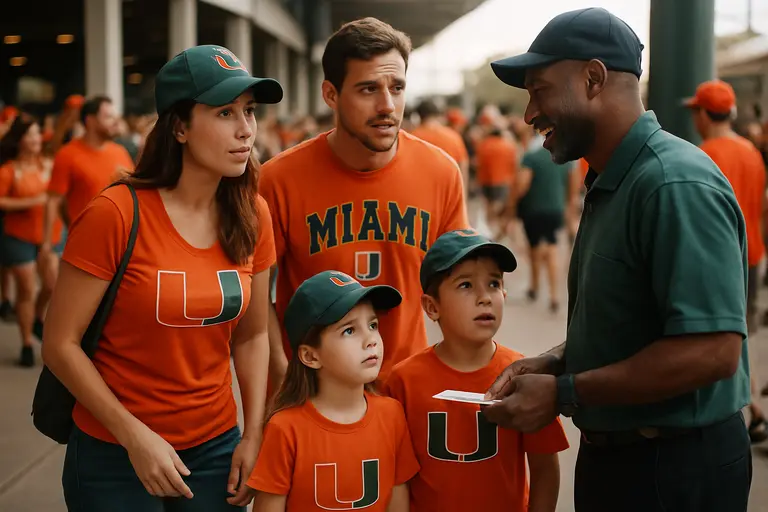
Strong crowds need standards. The research identifies Miami’s “U Respect” program as an ongoing effort in 2026 to promote positive behavior among fans, student-athletes, and staff. Its code of conduct prohibits disruptive or discriminatory behavior and centers the message: “Respect the game. Respect the fans. Respect the U.”
That type of initiative may sound basic, but it is part of fan retention. Families are more likely to return when they trust the environment. Students are more likely to bring friends when the section feels spirited without crossing into abuse. Visiting fans may not love the result, but they should not feel targeted in ways that damage the host school’s reputation. In that sense, sportsmanship is not separate from engagement; it supports it.
Sponsors Should Support The Event, Not Swallow It
The research also notes a 2024 partnership involving Perry Ellis and Original Penguin that included fan engagement activations such as pre-game tailgates, fashion makeovers, fan zones, and student-athlete ambassadors across several sports. Sponsorship can help fund better experiences, but the balance matters. Fans usually respond best when activations add comfort, access, or a memorable touch rather than making the event feel like a long advertisement.
Miami’s challenge is to keep sponsor activity aligned with the athletic experience. A good fan zone can help families arrive earlier, reduce idle time before tipoff or first pitch, and give students another reason to gather. A crowded or overbranded activation can have the opposite effect. The research supports the existence of these efforts, but it does not give satisfaction scores, so the fair assessment is that they are promising tools whose impact depends on execution.
Why This Miami Hurricanes Fan Engagement Model Matters
The Community Test For Miami
The most convincing part of Miami Hurricanes Fan Engagement is that it works across several audiences at once. Students get rewards and group competition. Digital-first supporters get mobile tools and a redesigned site. Local residents see service work and outreach. Families get conduct standards that aim to protect the atmosphere. Sponsors get event space, but the best version keeps the teams and athletes at the center.
The limits are just as clear. The available research does not prove that every initiative caused higher attendance, stronger donations, or deeper long-term loyalty. It does show a department building engagement through measurable systems rather than relying only on tradition. That is a meaningful distinction in Miami, where attention is earned weekly and where Hurricanes athletics must connect campus pride with the wider city.
For college sports programs across Florida, the lesson is practical. Fan connection is not one campaign. It is a series of repeatable touchpoints: rewards that bring students through the gates, digital platforms that reduce friction, athletes who serve locally, and event standards that make people comfortable returning. If Miami continues to publish participation totals and outcome data, Miami Hurricanes Fan Engagement can be judged with even more precision. For now, the evidence points to a community strategy with real structure behind the energy.