
The Rays Stadium Deal has moved from negotiation to approved local policy, and that changes the sports map for Tampa in practical ways: venue access, public infrastructure, campus planning, and the long-term home of Major League Baseball in the region. On August 27, 2026, the Tampa City Council approved a $2.3 billion agreement involving the Rays, Hillsborough County, and the City of Tampa for a new ballpark and mixed-use district at the Hillsborough College Dale Mabry campus, according to AP reporting.
For local fans, this is not just a stadium story. It is a public works story with baseball at the center. The plan connects a fixed-roof ballpark, a college campus, roads, sidewalks, parking, hospitality, retail, housing, and public spaces into one 113-acre district. That is a large commitment for a market that has debated the Rays’ long-term location for years, and the public votes in late August 2026 gave the project a firmer path than prior stadium proposals.
As Ava Kingsley, I love the energy of a ballpark debate, but the evidence matters more than the roar. The approvals do not remove every risk. Construction timing, cost control, transportation execution, and community access still need close attention. Still, the project’s approved framework gives Tampa Bay sports leaders something rare in stadium politics: a defined site, public votes, a financing split, and a lease structure tied to a non-relocation commitment.
Rays Stadium Deal Approval Timeline
City And County Votes
The approval sequence was tight and politically divided. The Tampa City Council voted 4-3 on August 27, 2026. The Hillsborough County Commission followed one day later with a 5-2 vote on August 28, 2026, committing $796 million toward the public side of the project, while the City of Tampa committed $80 million and the Rays committed about $1.37 billion plus all cost overruns, according to MLB’s account of the county vote.
That sequence matters because split votes show both momentum and concern. A one-sided vote might have suggested easy consensus. These votes suggest a more cautious public mood: enough support to advance the project, but enough opposition to keep scrutiny alive. In practical terms, local residents should expect the next stages to be judged on delivery, not promise.
What The Rays Stadium Deal Locks In
The Rays Stadium Deal places the ballpark in Hillsborough County ownership, with the Rays leasing and operating the stadium. The use agreement spans 35 years and includes a non-relocation commitment. The Rays are obligated to pay $4 million per year in rent. Those details are central because they frame the deal as more than a construction package; they define who owns the asset, who runs it, and how long MLB is tied to the site.
The planned ballpark is expected to hold roughly 31,000 seats and include a fixed roof. That design choice fits the needs of summer baseball in Florida, where heat and rain can disrupt fan comfort and operations. The team has aimed for the new ballpark to open by Opening Day 2029, while Tropicana Field’s lease runs through the 2028 season. As of September 8, 2026, that schedule remains a target tied to successful project execution.
What The Ballpark Changes On Game Days
Fixed Roof, Smaller Capacity, Clearer Fan Flow
A roughly 31,000-seat ballpark would represent a more compact MLB setting than many older multipurpose venues. That can help atmosphere when attendance matches capacity, though it does not guarantee sellouts or solve every access concern. The fixed roof is the clearest fan-experience upgrade in the plan. It would give families, visiting fans, workers, and players a more predictable environment during the long Florida summer.
Game-day operations will depend on more than the building. The surrounding transportation plan will shape how fans arrive, how campus users move, and how nearby businesses handle peak demand. Roads, sidewalks, parking, and public spaces are part of the project outline. Those pieces can either support the stadium or strain it. For a local sports district, the difference between an enjoyable night out and a frustrating one often begins before the first pitch.
Why Location Changes The Sports Routine
Moving the Rays’ operational base firmly into Tampa would shift habits for fans across Hillsborough and Pinellas counties. Tropicana Field has been the club’s long-running home, but the proposed site near the Dale Mabry campus changes the gravity of Rays baseball. Fans who build travel routines around bridges, work commutes, youth baseball nights, and school calendars will need a different playbook if the 2029 target is reached.
This is where Tampa’s broader sports identity comes into focus. Steinbrenner Field is already part of the area’s baseball fabric, and a new MLB facility in the same broader corridor would increase the area’s importance for professional baseball events, training culture, and sports tourism. The plan does not erase regional concerns about access, but it does create a concentrated sports district with a stronger Tampa address.
Public Funding And Local Accountability
The Public Share Is Large
The financing split is the most sensitive part of the agreement. Hillsborough County’s $796 million commitment and Tampa’s $80 million commitment put public money into a private-team stadium district, even with the Rays paying about $1.37 billion and covering cost overruns. The Rays Stadium Deal relies on public funding streams that local leaders have described as coming largely from tourist development taxes, a half-cent sales tax, and other local taxes earmarked for community investment.
The city’s $80 million is set to be paid in four annual installments from 2027 to 2029. The research record also states that no new taxes are being levied and that public safety funding, including police and fire, is protected. Those protections are meaningful, but they do not end the accountability question. Public money used here is public money not used somewhere else, so residents should be able to track what is delivered and when.
Cost Overruns And Lease Terms
The Rays’ obligation to cover all cost overruns is one of the strongest safeguards in the structure. Stadium projects can become flashpoints when costs rise. If the overrun language holds as described, it reduces exposure for local governments after the agreed public commitments. The 35-year use agreement and non-relocation commitment also give public officials a measurable return: long-term MLB presence rather than a shorter-term venue arrangement.
Rent of $4 million per year gives the county a defined annual payment, though rent alone should not be viewed as the only measure of value. The larger public case rests on infrastructure, campus upgrades, year-round district use, and the retention of a major professional franchise. Each of those claims can be evaluated over time through construction milestones, public access, traffic performance, event activity, and district use beyond Rays home games.
Community Infrastructure Beyond Baseball
College Campus And Public Space
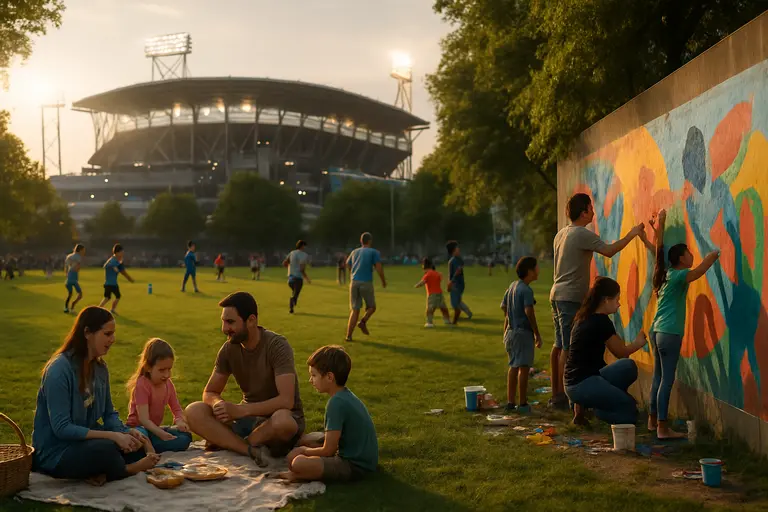
The project includes reimagining the Hillsborough College campus with modern classroom and administrative buildings. That is a significant part of the sports-infrastructure story because it ties a pro venue to an educational setting. If executed well, the plan could give the campus better facilities while creating more public space around the stadium district. If execution slips, the same tie-in could create disruption for students, staff, and nearby residents.
For college athletics and youth sports in Florida, facilities shape opportunity. Better transportation, safer walkways, and more public gathering areas can help more than MLB crowds. They can affect families attending community events, students moving across campus, and local businesses serving game-day and non-game-day visitors. That broader value is possible, but it will depend on design choices and public oversight.
Infrastructure Items To Watch
The clearest way to judge the project is to follow the physical work, not promotional language. Tampa Bay has seen enough stadium debate to know that renderings do not move traffic or shorten walks. The project’s sports value will be tied to whether the district functions on a Tuesday night in July as well as it does for a marquee weekend series.
- Transportation: Road improvements, drop-off patterns, and transit access will shape arrival times and neighborhood pressure.
- Pedestrian Safety: Sidewalks and crossings matter for students, families, stadium workers, and fans.
- Parking: Supply, pricing, and circulation will affect whether the district feels accessible.
- Campus Operations: Construction phasing should protect classroom and administrative needs.
- Year-Round Use: Retail, hospitality, housing, and public spaces need activity beyond baseball dates.
Those checkpoints are not flashy, but they are the real test. A ballpark can be beautiful and still fail the daily-life test if access is poor. A district can be ambitious and still fall short if public space feels disconnected from the community it is meant to serve.
Why The Rays Stadium Deal Matters For Tampa
The Rays Stadium Deal matters because it links Tampa’s pro sports future to public infrastructure choices that residents will live with long after the first pitch. It gives the Rays a planned post-Tropicana Field home, sets a target of Opening Day 2029, and ties the franchise to a 35-year use agreement with a non-relocation commitment. That is the sports headline.
The civic headline is just as large. Hillsborough County would own the stadium, the Rays would operate it, public funds would help build the project, and the surrounding district would reshape part of the Dale Mabry campus area. Supporters can point to MLB stability, campus investment, mobility improvements, and potential year-round activity. Skeptics can fairly ask whether public dollars will produce enough shared value. Both readings deserve space because this is a major local sports infrastructure decision, not a routine facility upgrade.
For Tampa Bay, the next measure is performance. Approved agreements are one step. Delivering a functional ballpark district, protecting public commitments, supporting campus life, and improving the fan experience are the standards that should guide every update between September 8, 2026, and the planned 2029 opening window.