
USF Football community work has become one of the clearer ways to measure how the Bulls’ program connected athletics with education, service and Tampa Bay identity beyond Saturday results. As of October 5, 2026, the strongest available evidence points to a program using volunteer events, student-athlete development, fan engagement and long-term facilities planning to widen its local reach without asking the football story to stand only on wins and losses.
That matters in a Florida college sports market where community trust is earned in small, verifiable steps. A youth camp can introduce fundamentals and leadership. A volunteer day can place students, alumni and athletes in the same civic lane. A stadium plan can reshape campus routines for decades if access, student seating and shared-use planning work as intended. The cautious part is key: impact should be judged by documented participation, stated commitments and visible follow-through, not by promotional language alone.
USF Football community Signals A Wider Mission
Why USF Football community Work Fits The Program
The clearest thread running through USF’s off-field activity is the link between athletics growth and campus life. USF’s athletic department has described a long progression from limited early facilities to the planned on-campus stadium era, with the school committing the maximum allowable $20.5 million to a 2026-27 revenue-sharing fund for student-athletes, according to a USF athletics review. That fund is not a community service event by itself, but it matters because the research connects it to student-athlete development, including financial planning, branding and marketplace skills.
For football, that shift changes the off-field conversation. Players are no longer only representing a roster; they are learning how to manage public identity, NIL earnings and community-facing projects. That does not guarantee good outcomes, and no claim should be made without measured results. Still, the structure gives athletes more tools to connect personal initiative with service, which is exactly where college athletics can have local value.
From NIL Education To Real-World Responsibility
The research notes point to wide receiver Mudia Reuben’s Nigeria Water Project as the most striking individual example. Started in 2024 and still active as of October 5, 2026, the project has used donations and NIL earnings to support boreholes in villages near Benin City, Nigeria, including Uvbe, Urhokuosa, Ebue-Neki, Iguovbiobo, Fortress Preparatory Academy and a sixth in progress in Ohovbe. The stated purpose is practical: clean local water can reduce daily burdens for children and support access to education.
That story has a sports education angle that should not be missed. NIL is often discussed in recruiting terms, but this example shows a player using marketplace opportunity for a service project tied to childhood, schooling and daily living conditions. The facts available do not give a full cost audit or long-term water access data, so the fairest reading is cautious praise: the initiative is meaningful, player-led and worth tracking as a model for how athlete education can move from classroom concept to community action.
Service Numbers Show Local Reach
Stampede Of Service Produced Measurable Output
USF’s 2026 Stampede of Service offers the strongest set of concrete local numbers in the research. The event recorded 357 volunteers, a 9.8% increase over 2025, while volunteers collected 1,835 pounds of trash, donated more than 125 food items and 36 professional clothing items, assembled 300 hygiene kits for children and wrote 69 letters to veterans and active military members, according to the Stampede of Service report.
Those figures matter because they are specific. They do not tell us how many football players took part, and the available research should not be stretched beyond what it says. But the event still fits the broader USF athletics picture because it placed students, alumni and community members in shared service spaces. For a football program trying to strengthen its local ties, that type of university-wide service platform can help athletes and fans see the school as more than a game schedule.
- Community service: Trash collection, hygiene kits, food donations and letters to military members created tangible outputs.
- Student support: Feed-a-Bull and Suit-a-Bull donations connected service to campus needs.
- Alumni ties: The alumni association setting gave graduates a direct role in active campus service.
USF Football community work is strongest when it has numbers attached. Participation totals and donation counts allow supporters, alumni and local families to evaluate progress rather than rely on feel-good claims.
Youth Events Link Football Skills With Leadership
The July 18, 2026 Camp with the Champs in Savannah, Georgia, added a player-led youth element to the off-field record. The research notes identify USF players Terry Simmons Jr., Za’Quan Bryan, Luke Kromenhoek and Kenny Odom among those involved in the fourth annual camp, which ran from 9 a.m. to 2 p.m. and benefited Ronald McDonald House Charities of the Coastal Empire. Youth participants were taught football fundamentals and leadership concepts.
This was not a Tampa event, so its local meaning for USF should be framed carefully. Its value sits in player development and hometown connection, especially when athletes return to communities that shaped them. Florida college programs often recruit and build identity across the Southeast, and service-based camps can reinforce that football development is not limited to the practice field. For a related Florida youth-football angle, our coverage of Southwest Florida football growth also tracked how camps and service can sit beside player development.
Player Development Extends Past The Roster
Revenue Sharing And NIL Training Change The Assignment
The 2026-27 revenue-sharing commitment gives USF a major student-athlete development test. The research says the school committed the maximum allowable amount of $20.5 million for that fiscal year. The practical question is not only how much athletes receive, but how well they are prepared to manage new income, public obligations and brand choices while staying connected to academic and community expectations.
Football players live in one of the most visible corners of campus life. That visibility can create pressure, but it also creates teaching moments. Financial literacy, ethical NIL guidance and branding education can help athletes make choices that outlast eligibility. The Reuben water project is one example from the research; the broader issue is whether similar training helps more athletes understand how public attention can support service, family responsibilities or career planning.
Fan Events Build Familiarity Before Kickoff
USF also used fan-facing events to connect the team with students, alumni and families. On August 22, 2026, the school hosted the inaugural Bulls Fest at the Porter Family Indoor Performance Facility. The research describes it as a free event with student-athletes, coaches, family activities, giveaways, music and an introduction of the 2026 football team.
The sports value of an event like Bulls Fest is not measured by a box score. It is measured by access. Fans who meet players in a low-pressure setting may feel a stronger tie to the program, especially families and students who are still forming their college sports habits. USF Football community engagement needs these low-barrier touchpoints because Tampa Bay offers many entertainment choices, from pro teams to beach weekends to youth tournaments. College football loyalty grows when the program feels present and approachable.
Stadium Planning Carries Community Stakes
Campus Design Choices Will Shape Game-Day Habits
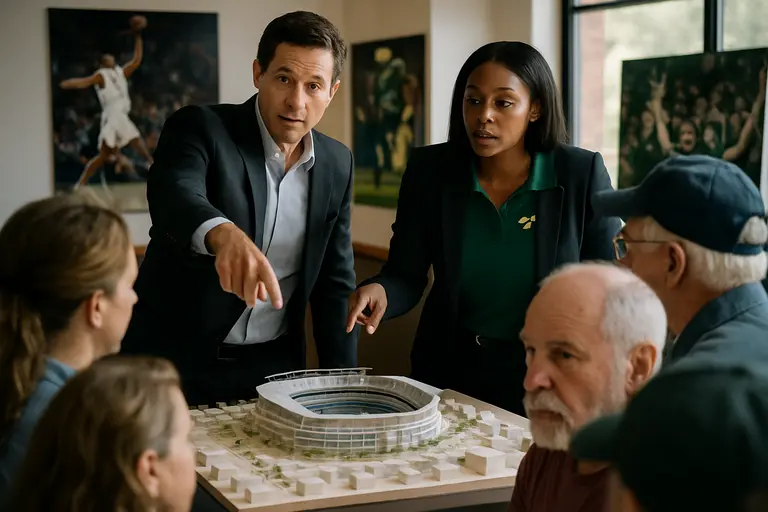
USF broke ground in 2024 on its first on-campus stadium, a planned 35,000-seat facility scheduled to open in fall 2027. The research notes design features that include 8,000 student seats in the west end, open concourses for tailgating and fan engagement, and shared use for concerts and college events. Since October 5, 2026 comes before the scheduled opening, the correct frame is planning and expectation, not results.
For Tampa, the stadium plan could become one of the most visible extensions of the football program’s civic identity. A campus stadium can change pregame routines, student attendance patterns and alumni return visits. Yet those benefits depend on operations: traffic flow, parking, accessible entry, shade, concessions, safety communication and the ability to host non-football events without straining campus life. The research supports the broad plan, but it does not yet prove the finished impact because the venue has not opened.
Sportsmanship Is Part Of The Fan Experience
The Respect-A-Bull Sportsmanship Campaign remained active as of the research date and promotes positive behavior at USF home athletic events, including football games. It recruits ambassadors from students, faculty and staff to help create a welcoming environment. This kind of program can sound secondary compared with recruiting and facilities, but it sits close to the fan experience that families remember.
Sportsmanship campaigns are difficult to evaluate without incident data, participation totals or postgame surveys. Still, the concept fits the same off-field pattern: USF is trying to make football a campus gathering point rather than a narrow athletic product. If the future stadium brings more students and alumni onto campus, behavior standards and ambassador programs will matter even more.
What USF Football community Means For Tampa Bay
USF Football community work should be judged by evidence: volunteer counts, donation totals, athlete-led projects, education programs, fan access and facility planning that can be checked against public records. On that basis, the Bulls have several credible off-field markers as of October 5, 2026. Stampede of Service produced measurable outputs. Bulls Fest gave fans a free preseason connection point. Camp with the Champs tied players to youth instruction and charity. NIL education helped frame athlete responsibility in a new college sports economy. The on-campus stadium project set up a major test for how football can serve students, alumni and Tampa neighbors in fall 2027 and beyond.
The encouraging part is that these efforts reach different groups: children, students, alumni, veterans, active military members, families and international communities connected through a player’s personal project. The cautious part is that long-term impact still needs tracking. Community engagement should not be treated as a single photo opportunity. For USF, the next standard is consistency: repeatable programs, transparent numbers and athlete development that keeps service tied to education.